Your Chimney Is Telling You It Needs Cleaning — Here’s How to Read the Signs
Most chimney fires don’t announce themselves.
According to the Chimney Safety Institute of America (CSIA), roughly 25,000 chimney fires occur in U.S. homes every year, and the majority happen in chimneys that haven’t been professionally cleaned in more than a year.
For homeowners in Bridgeton, Vineland, and throughout Cumberland County, that statistic carries real weight. Older homes across this part of South Jersey often have fireplaces and wood stoves that see heavy use throughout the winter and then go untouched until the following October.
Chimney cleaning isn’t a luxury service.
It removes creosote, a highly flammable, tar-like byproduct of wood combustion that accumulates on flue walls with every fire you burn.
NFPA 211, the standard governing chimneys, fireplaces, and venting systems, recommends that chimneys be inspected at least once a year and cleaned whenever significant creosote deposits are present.
The question most homeowners ask is simple:
How do I know when it’s time?
In most cases, the answer is already right in front of you.
Warning Signs You Can See, Hear, or Smell Right Now
Below are some of the most common signs that your chimney is overdue for professional cleaning.
Some warrant scheduling service this week.
A few warrant calling today.
Black, Oily Residue Around the Fireplace Opening or Damper
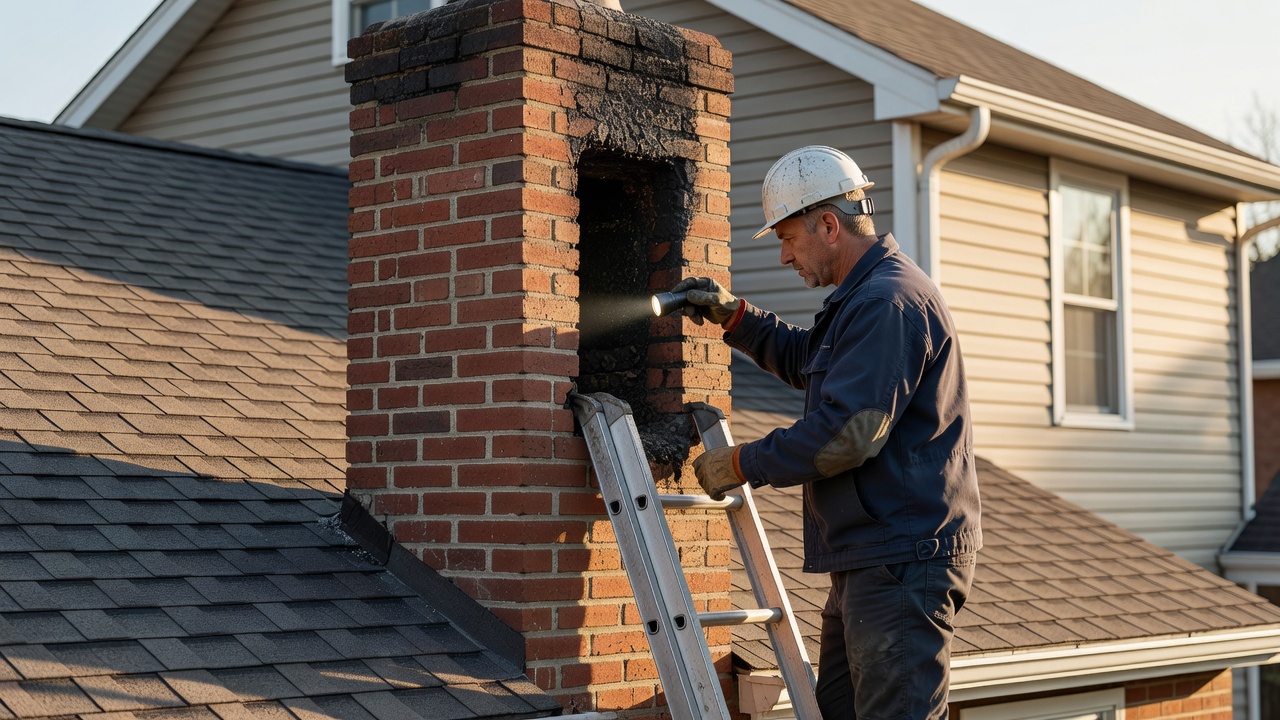
Open the damper and shine a flashlight up into the flue.
If you see a shiny, tar-like coating or heavy black buildup on the damper plate or the first few feet of the flue, you’re likely looking at Stage 2 or Stage 3 creosote—the types most likely to ignite.
This isn’t a “keep an eye on it” situation.
Call a professional now.
Stage 3 creosote typically requires specialized chemical treatment before standard chimney brushes can safely remove it.
A Strong Smoke Smell When the Fireplace Isn’t Being Used
If your Bridgeton home smells like a campfire during a warm, humid afternoon and nobody has used the fireplace recently, that odor is often creosote releasing vapors inside the chimney.
The smell travels through the damper and into your home.
In other words, the problem is announcing itself.
Schedule a chimney cleaning before the heating season begins.
Smoke Entering the Room Instead of Going Up the Chimney
A properly functioning fireplace should pull smoke upward through the chimney.
If smoke repeatedly spills into the room, the cause could be a cold flue or a partially closed damper.
However, if it continues after you’ve fully opened the damper and allowed the chimney to warm, heavy creosote buildup restricting airflow becomes a likely cause.
Monitor the situation after a single occurrence.
If it happens during two or three fires in a row, call a professional.
Visible Debris or Chunks in the Firebox
Small black flakes, pieces of mortar, or fragments resembling broken tile inside the firebox may indicate that the chimney liner is deteriorating.
Many Bridgeton homes built before 1980 still have original clay tile liners, many of which have exceeded their intended service life.
A damaged chimney liner is more than a cleaning issue.
It’s a structural safety concern.
Call a professional now.
Expect both a Level 2 chimney inspection and a chimney cleaning recommendation.
Slow-Starting Fires and Weak Heat Output
If firewood that once ignited easily now takes multiple attempts to burn and the fire never develops strong heat a restricted chimney draft could be part of the problem.
Heavy soot and creosote deposits reduce airflow through the flue.
If you’re burning properly seasoned firewood and the problem continues, reduced draft caused by chimney buildup is worth investigating.
Monitor the next one or two fires.
If nothing improves, schedule a professional inspection.
A Rumbling or Roaring Sound You’ve Never Heard Before
An active chimney fire often sounds like a low freight train moving through the walls.
It isn’t subtle.
If you hear that sound:
- Leave the house immediately.
- Call 911.
- Do not use the fireplace again until a CSIA-certified chimney professional has inspected and cleaned the entire system.
White Staining on the Exterior Chimney
White, chalky deposits on the outside of your chimney are known as efflorescence.
They indicate that moisture is moving through the masonry.
Water accelerates creosote buildup and speeds up chimney liner deterioration.
It also means your chimney inspection should include a discussion about waterproofing.
Monitor minor surface staining.
However, if the staining spreads across multiple rows of brick or you notice bricks beginning to flake or crumble (spalling) schedule professional service before the next heating season.
A Damper That Won’t Open Fully
Open and close the damper several times.
It should move freely and lock securely in the open position.
If it sticks, scrapes, or won’t fully open, restricted airflow limits chimney draft and traps combustion gases.
It may also indicate moisture damage inside the firebox or flue.
Schedule a chimney cleaning and have the damper inspected during the same visit.
What Chimney Cleaning in Vineland and Bridgeton Actually Includes
When you schedule service with Vineland Chimney, here’s what a professional chimney cleaning typically includes.
The technician begins by protecting your home with drop cloths around the fireplace and surrounding flooring.
A visual inspection follows, evaluating the firebox, damper, smoke shelf, and all accessible portions of the chimney.
Next comes the chimney sweeping itself.
Rotary brushes sized specifically for your flue are used to remove creosote deposits, either from inside the home or from the roof, depending on the chimney’s design.
The loosened debris is collected and removed using professional vacuum equipment designed to prevent soot from entering your living space.
A Level 1 chimney inspection is typically included during routine cleaning.
If the technician identifies possible chimney liner damage, crown deterioration, or failing mortar joints, a Level 2 camera inspection may be recommended.
That’s not an upsell.
NFPA 211 establishes clear guidelines for when each inspection level is appropriate, and a camera inspection remains the most reliable way to evaluate the condition of the chimney liner.
What Chimney Cleaning Costs in Cumberland County
For a standard single-flue fireplace in Vineland, Bridgeton, or Millville, professional chimney cleaning generally costs between $150 and $250.
That typically includes chimney sweeping and a Level 1 inspection for a chimney that’s otherwise in good condition.
If Stage 3 creosote is present, expect additional charges for specialized removal methods.
If a camera inspection identifies chimney liner damage, repair estimates are generally provided separately.
Many chimney companies throughout the area charge approximately $75 to $125 for a standalone Level 2 inspection when it’s performed without chimney cleaning during the same visit.
Waiting until December when many South Jersey chimney companies are booked weeks in advance—often costs more in scheduling delays than the maintenance itself.
Schedule Your Thorough Inspection Before Fireplace Season
The warning signs above are all things you can identify before lighting your first fire of the season.
If you’ve noticed two or more of them, the safest next step is a professional chimney cleaning and inspection before using your fireplace again.
Vineland Chimney proudly serves homeowners throughout Bridgeton, Millville, Vineland, and communities across Cumberland County.
Contact us today to schedule your free chimney inspection.
A CSIA-trained technician will evaluate your chimney, provide an honest assessment, explain exactly what your system needs, and help ensure your fireplace is ready to burn safely this winter.
Our services
Landisville, New Jersey Chimney Sweep, Repair & Inspe… · Buena, New Jersey Chimney Sweep, Repair & Inspection … · Audubon, New Jersey Chimney Sweep, Repair & Inspectio… · Ocean City, New Jersey Chimney Sweep, Repair & Inspec… · Haddonfield, New Jersey Chimney Services · Pleasantville, New Jersey Chimney Services
Areas we serve
Vineland, NJ · Vineland, NJ · Vineland, NJ · Vineland, NJ · Vineland, NJ · Vineland, NJ · All areas →