Signs Your Chimney Needs Creosote Removal: What Every Homeowner Should Know
Creosote is a natural byproduct of burning wood. As smoke travels through the chimney, combustion byproducts condense on the cooler walls of the flue, gradually forming creosote deposits. Over time, these deposits can accumulate and increase the risk of a chimney fire if they are not removed.
The National Fire Protection Association (NFPA 211) recommends that chimneys, fireplaces, vents, and solid fuel-burning appliances be inspected at least once each year and cleaned whenever necessary. Knowing the warning signs of excessive creosote buildup can help you determine when it’s time to schedule a professional chimney inspection.
Signs Your Chimney May Need Creosote Removal
1. Thick Black Buildup Inside the Chimney
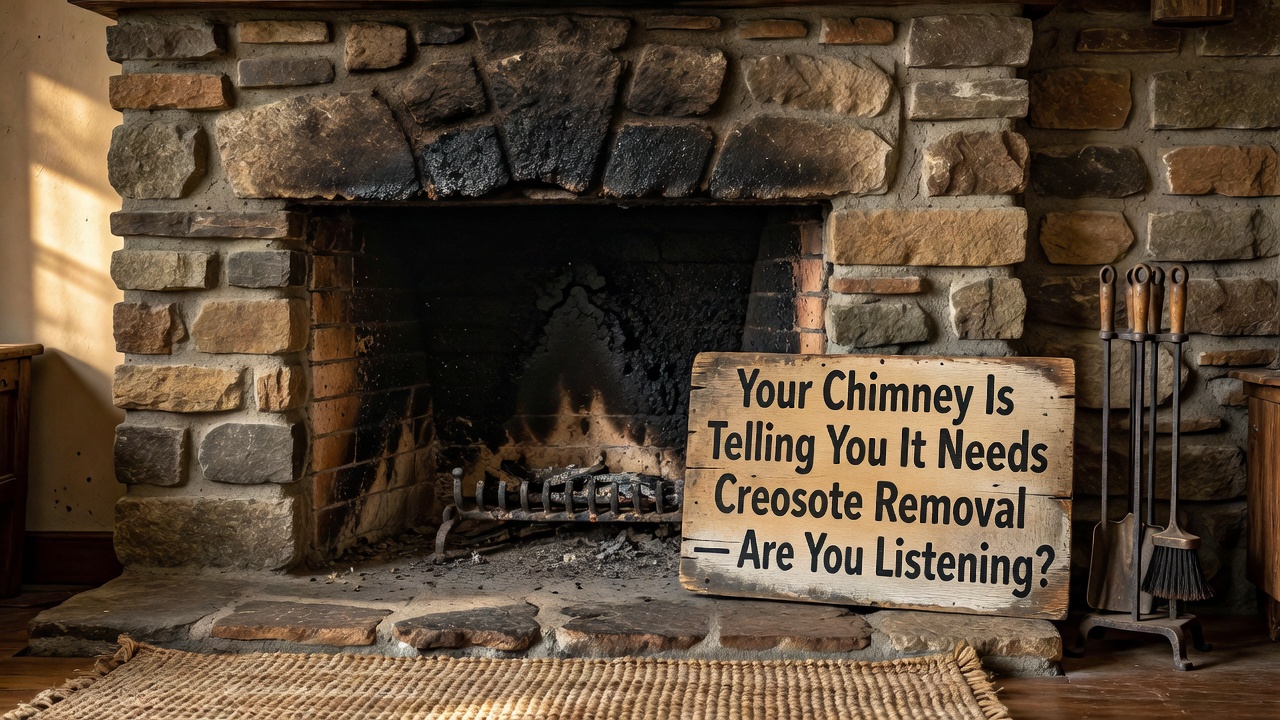
If you can safely see thick black or shiny deposits around the damper or other accessible areas of the chimney, excessive creosote accumulation may be present. Heavier deposits are generally more difficult to remove and should be evaluated by a qualified chimney professional before continued fireplace use.
2. Persistent Smoky Odors
A lingering smoky smell when the fireplace is not in use may indicate creosote buildup, moisture, draft issues, or other chimney conditions. A professional inspection can determine the cause and whether cleaning is recommended.
3. Creosote or Debris Falling Into the Fireplace
If dark flakes or debris regularly fall into the firebox, it may indicate that creosote deposits or other chimney materials are deteriorating. An inspection can identify the source and determine whether chimney cleaning or repairs are needed.
4. Reduced Draft
If smoke no longer exits the chimney efficiently or enters the room during normal fireplace operation, creosote buildup, debris, or other venting issues may be restricting airflow.
A professional chimney inspection can identify the cause and recommend appropriate maintenance.
5. Unusual Noises During Fireplace Use
Popping or crackling sounds may have several possible causes. However, if you suspect a chimney fire—especially if accompanied by loud roaring noises, dense smoke, or visible flames or sparks exiting the chimney—leave the home if necessary, call emergency services, and do not use the fireplace again until it has been professionally inspected.
6. Dark Staining Near the Chimney Top
Dark staining around the chimney cap or crown may indicate that smoke, moisture, or combustion byproducts are escaping where they should not. A professional inspection can determine whether creosote buildup, water intrusion, or another chimney issue is contributing to the problem.
7. Heavy Residue on Fireplace Glass
Some discoloration on fireplace glass is common with wood-burning appliances. However, persistent heavy deposits that are difficult to remove may indicate incomplete combustion or conditions that contribute to increased creosote formation.
8. It’s Been More Than a Year Since Your Last Inspection
If your chimney has not been professionally inspected within the past year, scheduling an inspection is recommended, particularly if you regularly burn wood during the heating season.
What Professional Creosote Removal Involves
Professional chimney technicians begin by inspecting the chimney to evaluate the amount and type of creosote present.
Depending on the condition of the chimney, cleaning methods may include:
- Professional chimney brushing.
- Rotary cleaning equipment.
- Specialized treatments for hardened creosote deposits when appropriate.
- Follow-up inspections to evaluate the chimney liner and other accessible components.
The cleaning method is selected based on the chimney’s condition and the type of creosote present.
Why Routine Maintenance Matters
Regular chimney inspections and cleanings help professionals:
- Remove creosote buildup.
- Identify damaged chimney liners.
- Detect masonry deterioration.
- Check for blockages such as debris or animal nests.
- Evaluate the overall condition of the chimney system.
Addressing these issues early can help maintain the safe operation of your fireplace and reduce the likelihood of more extensive repairs.
Schedule Your Chimney Inspection
If you’ve noticed any of these warning signs—or if your chimney has not been inspected recently—scheduling a professional inspection is an important part of routine fireplace maintenance.
Vineland Chimney proudly serves homeowners throughout Bridgeton, Millville, Vineland, and surrounding Cumberland County communities with professional chimney inspections, chimney sweeping, creosote removal, and maintenance services. Our experienced technicians provide thorough evaluations, explain any findings clearly, and recommend services based on the condition of your chimney.
Contact Vineland Chimney today to schedule your professional chimney inspection.
Our services
Audubon, New Jersey Chimney Sweep, Repair & Inspectio… · Ocean City, New Jersey Chimney Sweep, Repair & Inspec… · Haddonfield, New Jersey Chimney Services · Pleasantville, New Jersey Chimney Services · Bellmawr, New Jersey Chimney Services · Somers Point, New Jersey Chimney Services
Areas we serve
Vineland, NJ · Vineland, NJ · Vineland, NJ · Vineland, NJ · Vineland, NJ · Vineland, NJ · All areas →