Chimney Cleaning in Vineland, NJ: What You Can Handle Yourself and When to Call a Pro
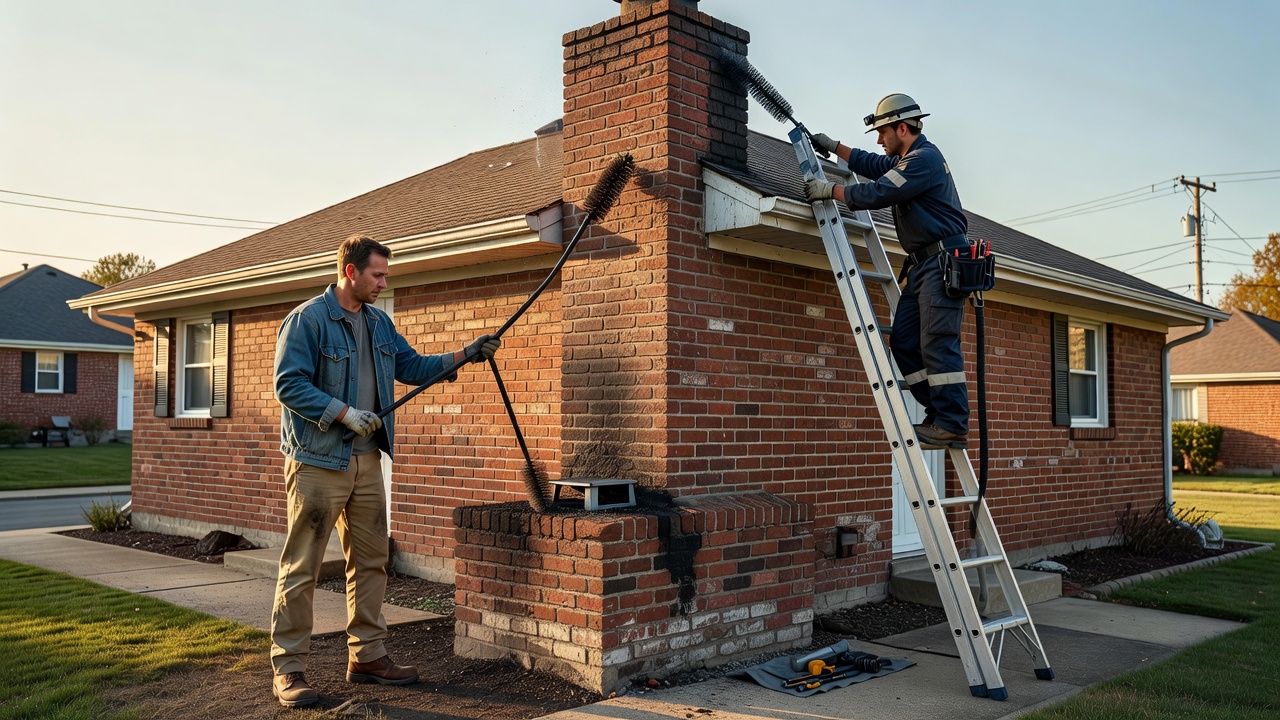
Chimney cleaning in Vineland, NJ is not always a job that requires a contractor from the first step. Homeowners can handle some basic fireplace maintenance, such as removing cooled ashes and visually checking accessible areas. More involved chimney cleaning, inspections, and repairs require greater care because problems inside the flue may not be visible from the firebox.
The key is knowing where routine maintenance ends and professional chimney work begins. A chimney should be inspected at least once a year, while cleaning, maintenance, and repairs should be performed when necessary. CSIA recommends sweeping masonry fireplaces when sooty buildup reaches about 1/8 inch or sooner if glaze is present.
What Creosote Is and Why It Matters
Creosote forms when smoke and other combustion byproducts from burning wood cool and condense on the inside of a chimney. The buildup can become highly combustible and contribute to chimney fires. EPA guidance identifies restricted airflow, unseasoned wood, cooler chimney conditions, and overloading a wood stove as factors that can increase creosote formation.
Creosote is sometimes described online using “Stage 1,” “Stage 2,” and “Stage 3” terminology. That language should not be presented as a formal NFPA classification. For homeowners, it is more useful to distinguish ordinary deposits from hard, tacky, or glazed buildup.
CSIA recommends sweeping a masonry fireplace at about 1/8 inch of sooty buildup or sooner if glaze is present. A professional may need specialized equipment when deposits are difficult to remove with ordinary sweeping.
Burning dry, seasoned wood can also help reduce smoke and creosote formation. EPA recommends wood with moisture content below 20 percent and advises against burning wet or unseasoned wood.
What a Vineland Homeowner Can Safely Handle
Some chimney-related maintenance can be performed by a homeowner when the fireplace is completely cool and the work does not require climbing onto the roof or entering difficult areas.
Removing Cooled Ashes
Removing cooled ash from a fireplace is basic maintenance. Use a metal container with a secure lid and keep the container away from combustible materials. EPA recommends removing ashes only after they have cooled and storing them in a covered metal container outdoors on a nonflammable surface.
Do not assume that ash removal is the same thing as chimney cleaning. Ash in the firebox and creosote inside the flue are different maintenance issues.
Looking at the Firebox and Damper
A homeowner can visually check accessible parts of the firebox for obvious damage and look at the damper to see whether it opens and closes properly.
Look for visible cracks, deteriorated masonry, unusual staining, or debris. If the damper is stuck, damaged, or difficult to operate, have it evaluated rather than forcing it.
A visual check also does not replace a professional chimney inspection. CSIA’s Level 1 inspection procedures include checking the fireplace, damper, accessible chimney components, blockage, and overall cleanliness of the venting system.
Checking the Chimney From the Ground
Binoculars can help homeowners look for obvious exterior problems without climbing onto the roof.
You may notice a missing chimney cap, damaged masonry, visible crown deterioration, or other exterior changes. If you see something concerning, take a photograph and have a professional evaluate it.
Avoid turning a ground-level inspection into a roof-climbing project. Chimney access can involve significant fall hazards, and a homeowner does not need to climb onto a roof simply to determine whether professional service is warranted.
Basic Firewood Maintenance
One of the most useful things a homeowner can control is the wood being burned.
EPA recommends burning dry, seasoned wood and avoiding wet wood, garbage, plastic, painted or pressure-treated wood. Properly dried wood produces less smoke and can reduce conditions that contribute to creosote buildup.
When You Should Call a Chimney Professional
Some situations go beyond routine homeowner maintenance.
Heavy, Hard, or Glazed Creosote
If the chimney contains significant or difficult-to-remove deposits, professional cleaning may be appropriate. Hard or glazed creosote can require equipment and techniques that go beyond a basic chimney brush.
A professional can also determine whether the chimney needs additional evaluation after the deposit is removed.
The important point is not whether the buildup fits an internet “stage.” The important question is whether the chimney can be safely and adequately cleaned using appropriate equipment.
A More Detailed Chimney Inspection
A Level 2 inspection is not automatically required simply because a chimney has gone more than two years without an inspection.
CSIA identifies several circumstances in which a Level 2 inspection is appropriate. These include selling a property, changing the appliance or fuel type, planning a relining project, or evaluating a chimney after a building or chimney fire, weather event, or operating malfunction that may have caused damage. A Level 2 inspection is also appropriate when a Level 1 inspection cannot establish that the system is serviceable.
A Level 2 inspection includes the Level 1 scope plus examination of accessible areas such as attics, basements, and crawl spaces where applicable. It also requires an interior video scan when the chimney can be scanned.
A camera is not automatically required for every routine Level 1 inspection. CSIA’s Level 1 procedure specifically notes that video scanning is not a mandatory part of a Level 1 inspection.
Damaged Flue or Liner
A damaged flue requires professional evaluation. CSIA identifies cracked or collapsed flue tiles, large missing sections, and evidence of smoke escaping through masonry or tile liner joints as signs that can indicate serious chimney problems.
The appropriate repair depends on the chimney construction, appliance, extent of damage, and applicable requirements. Possible solutions can include localized repairs or relining, but a stainless steel liner is not automatically the correct solution for every damaged flue.
Do not rely on a fixed local price range when deciding whether a liner needs repair or replacement. The scope of work can vary considerably from one chimney to another.
Crown, Masonry, or Flashing Problems
Exterior chimney repairs should generally be handled by an appropriately qualified professional, especially when the work involves the roofline, flashing, crown, structural masonry, or difficult roof access.
Visible cracks, deteriorating mortar, loose bricks, damaged flashing, or water intrusion deserve evaluation before they become larger problems.
A homeowner can identify many of these warning signs from the ground, but the appropriate repair cannot always be determined from a ground-level view.
Gas or Other Appliance Venting
Do not treat every chimney as though it serves a wood-burning fireplace.
Gas appliances, fireplace inserts, furnaces, and other heating equipment may have different venting requirements. Cleaning, inspection, installation, and repair should follow the appliance manufacturer’s instructions and applicable codes.
If you are changing the appliance or fuel type, that is also a circumstance where a more detailed chimney inspection may be appropriate.
What About Animal Nests?
Animals can enter open or damaged chimney tops, creating obstructions or other problems. A chimney inspection can identify nests or other blockages.
Homeowners should be especially careful with chimney swifts. The U.S. Fish & Wildlife Service identifies chimney swifts as migratory birds protected under the Migratory Bird Treaty Act. Their eggs and nests are protected, so an active nest should not simply be removed without considering applicable wildlife protections.
If you suspect an active bird nest in the chimney, contact a qualified professional before attempting removal.
A properly fitted chimney cap can help keep rain, animals, and debris out of the chimney, but the appropriate cap depends on the chimney and venting system.
Why a Clean Chimney Still Needs an Inspection
Cleaning and inspection are related, but they are not identical.
A chimney can be clean while still having a damaged liner, deteriorated masonry, a defective damper, or another problem that affects safe operation. CSIA recommends annual inspection, with cleaning, maintenance, and repairs performed when necessary.
EPA likewise recommends annual professional inspection of wood-burning appliances and chimneys. New Jersey fire-safety guidance also advises having heating equipment and chimneys cleaned and inspected annually by a qualified professional.
That is why simply brushing away visible deposits is not a substitute for evaluating the condition of the entire chimney system.
How to Decide Between DIY Maintenance and Professional Service
A simple way to think about it is:
Homeowner maintenance may include:
-
Removing completely cooled ashes
-
Looking at the accessible firebox
-
Checking that the damper moves normally
-
Looking at the chimney exterior from the ground
-
Checking firewood condition
-
Watching for smoke or unusual odors
Professional service is appropriate for:
-
Chimney sweeping when significant deposits are present
-
Hard or glazed creosote
-
Suspected flue or liner damage
-
A chimney fire
-
A property sale or transfer
-
Changes to the appliance or fuel type
-
Suspected chimney damage after a significant weather event
-
Masonry, crown, or flashing repairs
-
Difficult blockages
-
Detailed Level 2 inspections
-
Gas or other appliance venting concerns
If you smell smoke inside the home while using a wood-burning appliance, stop using it and have the system evaluated. EPA identifies indoor smoke as a sign that something may be wrong with the appliance or chimney system.
Getting Chimney Cleaning in Vineland, NJ
Homeowners in Vineland, Rosenhayn, and the surrounding Cumberland County area do not need to guess when professional chimney service is appropriate.
Start with the condition of the fireplace and chimney. If you only need routine ash removal or a ground-level visual check, those tasks may be manageable yourself. If you find significant creosote, a blockage, damaged masonry, suspected liner deterioration, or an appliance-related concern, bring in a qualified chimney professional.
When hiring a sweep, ask what level of inspection is being performed, whether sweeping is included, what was found, and whether recommended repairs are supported by photographs or other documentation. A written report can make it easier to understand what work is actually necessary.
The goal is not to pay for the most extensive service available. It is to keep the fireplace and chimney clean, inspected, and suitable for continued use.
Related from Vineland Chimney: Chimney Sweep in Vineland, NJ — Professional Cleaning & Inspection
Areas we serve
Vineland, NJ · Vineland, NJ · Vineland, NJ · Vineland, NJ · Vineland, NJ · Vineland, NJ · All areas →