Chimney Cap Installation in Vineland, NJ: What Homeowners Need to Know
A properly fitted chimney cap helps keep rain, animals, and debris out of a chimney while allowing combustion gases to vent safely. Without suitable protection, moisture can contribute to masonry deterioration, and animals or debris may obstruct the flue. For homeowners in Vineland, New Jersey, choosing the right cap involves more than selecting a material or matching a measurement. The chimney’s construction, flue configuration, existing damage, and ventilation requirements all matter. This guide explains chimney cap types, installation considerations, warning signs, and when to call a professional.
What Does a Chimney Cap Do, and Why Does It Matter?
A chimney cap covers the flue opening while leaving a suitable path for exhaust gases to escape. Depending on its design, it can help keep out rain, leaves, and animals. Some models also include a spark arrestor screen intended to reduce the escape of hot embers.
Moisture entering a chimney can contribute to deterioration of the liner, mortar joints, and masonry. A cap can help reduce water entry through the flue opening, but it cannot prevent every source of moisture intrusion. Damaged crowns, flashing problems, and cracks in the masonry may require separate repairs.
A properly selected cap can also help discourage birds and other animals from entering the flue. However, homeowners should check for signs of nesting before installing or replacing a cap. Chimney swifts are federally protected migratory birds, and disturbing active nests, eggs, or young birds can violate federal law.
Can You Install a Chimney Cap Yourself?
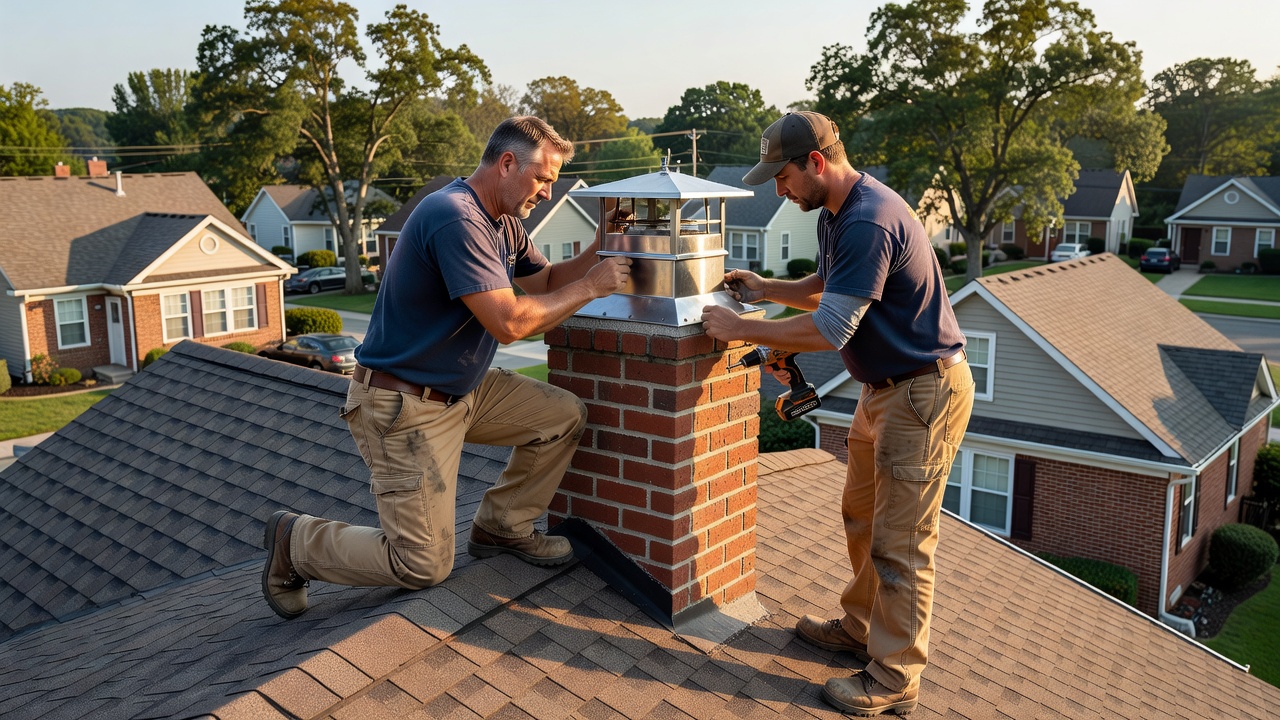
Some homeowners consider installing a basic cap on an accessible chimney, but roof work carries a fall risk. Measuring the flue, selecting compatible hardware, and securing the cap correctly can also be more complicated than expected.
An incorrectly fitted cap may become loose during a storm, interfere with exhaust flow, or fail to protect the opening. A professional can assess the flue dimensions, the condition of the crown, and the appropriate attachment method before installation.
If the chimney is tall, the roof is steep, or the cap requires custom fabrication, professional installation is the safer choice. Avoid climbing onto a roof without the necessary training and fall protection.
A cap installation can also reveal problems that need attention first, such as cracked flue tiles, loose masonry, or a deteriorated chimney crown. Installing a new cap does not repair those underlying defects.
What Types of Chimney Caps Are Available?
The right cap depends on the chimney’s construction and the number and arrangement of its flues.
Single-flue caps
A single-flue cap is designed to fit over or attach to one flue opening. It is a common option for masonry chimneys with a suitable projecting flue tile or compatible mounting surface.
Multi-flue caps
A multi-flue cap covers multiple flue openings using a larger assembly. The contractor must account for the layout of the flues and ensure the cap does not interfere with exhaust from any connected appliance.
Custom chase covers
Prefabricated chimney systems may have a metal chase cover that spans the top of the enclosure. If the cover is corroded, poorly fitted, or allowing water to collect, replacement may be necessary. Measurements and fabrication must match the particular chimney system.
Choosing a material
Common options include galvanized steel, stainless steel, and copper. Galvanized steel may have a lower initial cost but can corrode over time. Stainless steel and copper are often selected for their durability, although performance depends on the material grade, construction, exposure, and maintenance.
Compare the manufacturer’s specifications and warranty rather than assuming that one material is always the best choice. The cap must also be compatible with the chimney and appliance it serves.
How Do You Know If a Chimney Cap Needs Replacing?
A damaged or missing cap may leave the flue exposed to rain, animals, and debris. Look for warning signs such as:
-
Visible rust, holes, or broken mesh.
-
A cap that appears loose, bent, or displaced.
-
Bird activity or animal sounds inside the chimney.
-
Debris falling into the fireplace.
-
Water stains or dampness near the firebox.
-
Visible damage around the flue opening or chimney crown.
These signs do not all prove that the cap is the source of the problem. For example, water stains may result from a damaged crown, flashing, or masonry rather than a missing cap alone.
A professional can inspect the chimney top and determine whether the cap needs replacement or whether other repairs are necessary. Do not climb onto the roof to investigate damage if doing so would be unsafe.
What Does Professional Chimney Cap Installation Involve?
The process depends on the chimney type and the condition of the existing installation. A typical job may include:
-
Assessing the chimney top. The technician examines the flue opening, crown, and existing cap or mounting hardware.
-
Measuring the opening. The flue or chase is measured to determine the appropriate cap dimensions and attachment method.
-
Selecting the right cap. The chosen model must suit the chimney configuration and allow exhaust gases to flow as designed.
-
Removing damaged hardware. If an old cap is present, it may be removed and the attachment area checked for deterioration.
-
Securing the new cap. The cap is installed according to its design and the manufacturer’s instructions.
-
Checking the finished installation. The technician verifies that the cap is secure and that no obvious installation issue obstructs the flue.
If the crown or masonry is damaged, additional work may be needed. Crown repair or sealant should not be added automatically without assessing the material and the nature of the defect.
A cap installation may also be an opportunity to discuss a chimney inspection. However, homeowners should confirm whether a separate inspection is included in the estimate and what level of inspection will be performed.
How Much Does Chimney Cap Installation Cost?
The total price depends on the cap type, material, chimney height, roof access, and whether the existing installation needs to be removed or repaired.
A basic single-flue cap is generally a simpler job than a custom chase cover or a large multi-flue assembly. Stainless steel and copper options may also have different material costs. If the crown, flashing, or masonry needs repair, those services can increase the overall price.
Because chimney configurations vary, request a written estimate that identifies the cap type, material, installation labor, and any additional work. Ask whether the estimate includes an inspection and whether any proposed repairs are required before the cap can be installed.
Vineland Chimney advertises chimney inspection, cleaning, repair, and maintenance services on its website. Confirm directly with the company whether it currently offers free inspections and what is included before booking. You can find its contact information at vinelandchimney.com.
Does a Chimney Cap Affect Draft?
A properly selected and installed cap should be compatible with the chimney’s venting requirements. An unsuitable cap, blocked screen, or excessive buildup can contribute to airflow problems in some systems.
If smoke starts entering the room after a cap has been installed or replaced, stop using the fireplace and arrange a professional assessment before lighting another fire. The cause could involve the cap, an obstruction, the liner, the appliance, or pressure conditions inside the home.
Do not assume that the cap is responsible without an inspection. A qualified chimney professional can assess the installation and determine whether another problem is affecting draft.
Will a Chimney Cap Keep Animals Out Completely?
A properly fitted cap with an appropriate screen can help deter animals, birds, and debris, but it cannot guarantee that every animal will be kept out. Screens can corrode or become damaged, and an incorrectly fitted cap may leave openings.
Before installing a cap, check whether birds are already using the chimney. Chimney swifts are protected under the Migratory Bird Treaty Act. Active nests and dependent young must not be disturbed unlawfully. If you suspect nesting, consult a qualified wildlife professional or the relevant wildlife authority before proceeding.
Once the chimney is clear for lawful installation, choose a cap designed for the specific flue. Inspect it periodically for corrosion, loose hardware, and blockages.
How Often Should a Chimney Cap Be Inspected?
The CSIA follows NFPA 211 guidance recommending that chimneys, fireplaces, and vents be inspected at least once a year. Cleaning, maintenance, and repairs should be performed when necessary.
As part of regular chimney maintenance, the professional can check the cap and screen for corrosion, damage, debris, or loose fittings. Heavy use, storms, and visible deterioration may warrant additional attention.
A cap inspection is not a substitute for evaluating the full chimney system. The liner, crown, flashing, masonry, and connected appliance may also need attention depending on the findings.
What Should You Do If Your Chimney Cap Blows Off During a Storm?
If a cap comes loose or blows off, arrange an inspection and replacement before using the fireplace. An exposed flue may admit rain, debris, or animals, and the storm may also have damaged the crown or surrounding masonry.
Do not climb onto the roof to retrieve or reinstall the cap. Ask a qualified professional to inspect the chimney top, confirm that the attachment area remains sound, and install a suitable replacement.
If water is entering the chimney, ask the technician to identify the source rather than assuming a new cap alone will resolve the problem.
Chimney Cap Installation: DIY or Professional?
| Task | Homeowner guidance |
|---|---|
| Choosing a cap style | Research options, then confirm compatibility |
| Measuring the flue | Professional measurement is recommended |
| Removing an old cap | Hire a professional when roof access is hazardous or hardware is damaged |
| Installing a single-flue cap | Professional installation is recommended when roof access or fit is uncertain |
| Installing a multi-flue cap or chase cover | Professional measurement and installation are recommended |
| Checking the crown and liner | Arrange a professional inspection |
| Diagnosing draft problems | Stop using the fireplace until the cause is assessed |
| Routine chimney inspection | Have the chimney inspected at least annually |
Schedule Chimney Cap Service in Vineland, NJ
A chimney cap helps protect the flue opening from rain, animals, and debris, but it is only one part of a well-maintained chimney system. Choosing a suitable cap and installing it securely can help reduce common problems. Existing damage to the crown, flashing, liner, or masonry should be assessed separately.
If your cap is missing, damaged, or showing signs of corrosion, contact a qualified chimney professional to discuss the appropriate replacement. Vineland Chimney lists chimney services and contact details on its official website. Verify current pricing, service availability, and any free-inspection offer before scheduling.
A professional assessment can help establish which cap is appropriate for your chimney and whether additional work is needed before the next heating season.
Related from Vineland Chimney: Chimney Sweep in Vineland, NJ — Professional Cleaning & Inspection · Chimney Sweep in Vineland — Ready Before the First Cold Night Hits · Chimney Sweep in Millville, NJ
Our services
Chimney Cleaning & Repair Services in Williamstown, N… · Trusted Chimney Service in Bridgeton, New Jersey · Chimney Sweep in Bridgeton · Chimney Sweep in Millville, NJ · Chimney Sweep in Vineland · Chimney Sweep in Vineland, NJ
Areas we serve
Vineland, NJ · Vineland, NJ · Vineland, NJ · Vineland, NJ · Vineland, NJ · Vineland, NJ · All areas →