What Millville Homeowners Get Wrong About Annual Chimney Inspections
Most chimney problems don’t announce themselves. They can develop inside flue walls that haven’t been checked in years, behind creosote deposits that cannot be seen from the living room, or through cracks in clay tile liners that look fine from the firebox opening. In Cumberland County, where older homes in Millville, Bridgeton, and Vineland still use fireplaces and wood stoves through cold winters, that hidden deterioration can have serious consequences. The problem isn’t that homeowners don’t care. It is that several common misconceptions keep people from scheduling routine chimney inspections. Here’s where the thinking tends to go wrong.
“I Only Used It a Few Times Last Season”
This one comes up constantly. A homeowner in Millville burns maybe four or five fires between Thanksgiving and February, decides that’s not enough use to justify an inspection, and puts it off another year. The reasoning feels logical until you understand that creosote formation depends on factors such as combustion conditions, wood moisture, airflow, and how the fireplace is operated. A few slow, smoldering fires using poorly seasoned wood can produce significant deposits even with limited use.
Annual inspection is also about more than creosote. South Jersey weather can contribute to deterioration of masonry, crowns, flashing, and other exterior components. Freeze-thaw cycles can widen existing cracks and allow moisture to penetrate the chimney system. A chimney used only a few times during the winter can still have a damaged liner, deteriorating damper, animal intrusion, or moisture-related damage.
Those problems may not be visible from inside the firebox. That’s why limited fireplace use does not necessarily mean the chimney can safely be ignored.
“A Cleaning and an Inspection Are the Same Thing”
They’re not, and the difference matters.
A cleaning removes deposits and debris such as creosote, soot, leaves, and other material. An inspection evaluates the condition and operation of the chimney and venting system.
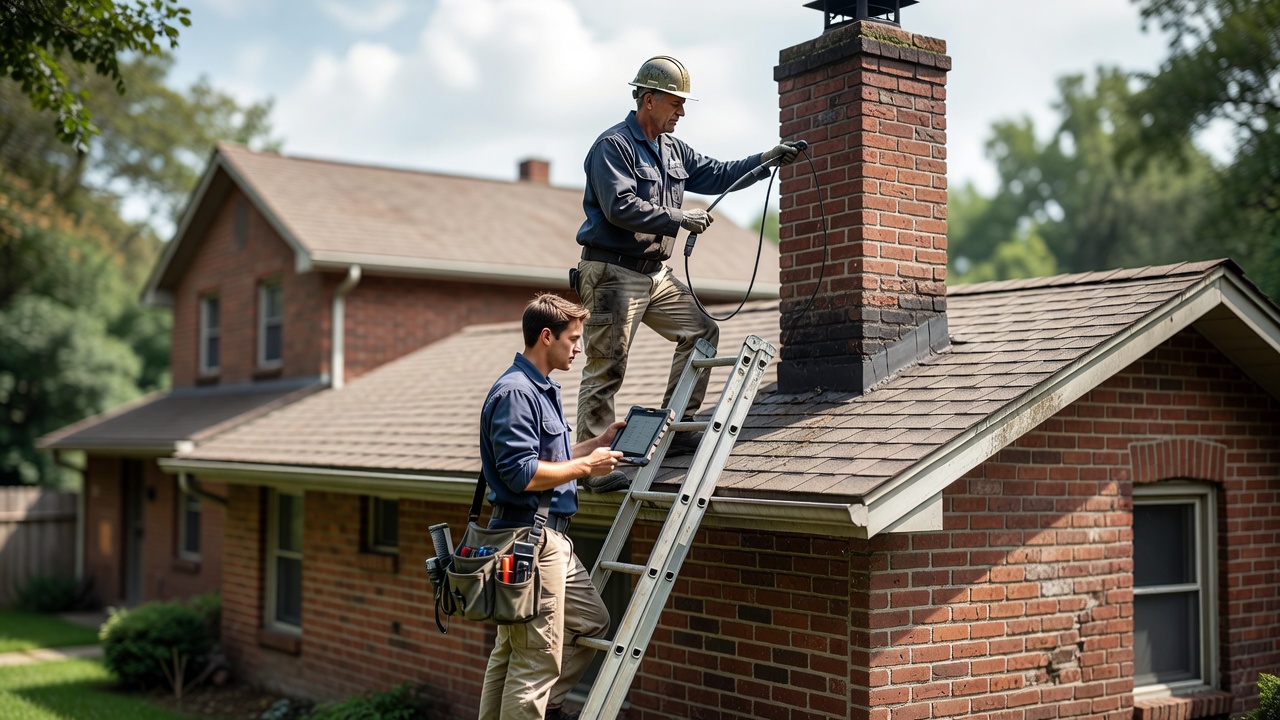
CSIA and NFPA 211 use a three-level inspection framework. Level 1 is generally appropriate when the appliance and venting system have not changed and there are no known problems. Level 2 is more comprehensive and includes video scanning of the flue interior when circumstances require it, such as a change in appliance or fuel type, a property transaction, or a suspected chimney fire. Level 3 involves more extensive investigation and may require access to concealed portions of the system when serious problems are suspected.
A technician who cleans the chimney should also explain what inspection is being performed and what was found. Ask for written documentation so you have a record of the condition of your chimney.
“The Smoke Detector Covers It”
Smoke detectors are essential life-safety devices, but they are not a substitute for chimney maintenance.
A smoke detector is designed to alert occupants when smoke reaches the detector. It does not evaluate the condition of a chimney liner, identify a blocked flue, detect a missing chimney cap, or determine whether masonry is deteriorating.
Carbon monoxide alarms serve a different purpose. They can alert occupants when dangerous concentrations of carbon monoxide are detected, but they also do not replace inspection of the chimney and venting system.
A damaged or obstructed flue can create dangerous conditions before a homeowner notices anything unusual. Regular chimney inspection is one way to identify those problems before the fireplace is used again.
“New Homes Don’t Need Inspections”
In Cumberland County, this misconception usually comes up with newer gas fireplaces or gas appliances.
Gas combustion generally produces less creosote than wood burning, but that does not mean the venting system can be ignored. Moisture, animal intrusion, damaged components, improper connections, or obstructions can still affect venting performance.
Homeowners who recently purchased a previously owned home in Millville and have no documented chimney or venting history should consider having the system professionally evaluated. If the history of the appliance, fuel type, previous inspections, or modifications is unknown, a technician can determine what level of inspection is appropriate.
A Level 2 inspection may be appropriate in certain situations, but it should be based on the circumstances rather than automatically prescribed simply because a home changed ownership.
“It’s Too Expensive to Be Worth It”
Annual chimney inspections in Cumberland County can vary in price depending on the chimney, appliance, inspection level, accessibility, and documentation provided. A basic Level 1 inspection may fall around $100 to $250, while a Level 2 inspection with video scanning may run approximately $200 to $400 or more.
Repairs can cost considerably more. Liner replacement, masonry restoration, crown repairs, damper replacement, or water damage can quickly turn a routine maintenance issue into a major expense.
The purpose of an inspection is not to guarantee that every problem will be prevented. It is to identify developing problems before they become more difficult and expensive to address.
Instead of focusing only on the inspection price, ask what the service includes. Confirm the inspection level, whether a written report is provided, and whether additional repairs require your approval before work begins.
Schedule Your Cumberland County Chimney Inspection
Don’t let limited fireplace use give you a false sense of security. Creosote buildup, liner damage, animal intrusion, and moisture-related deterioration can develop even when a chimney is used only a few times each season.
Vineland Chimney serves Millville, Bridgeton, Vineland, and surrounding Cumberland County communities. Contact our team to schedule a professional chimney inspection and find out which inspection level is appropriate for your system. We’ll provide clear documentation of our findings and explain any recommended work before moving forward.
Call Vineland Chimney today to schedule your chimney inspection and make sure your fireplace is ready for the next heating season.
Related from Vineland Chimney: Chimney Sweep Services in Vineland, NJ
Areas we serve
Vineland, NJ · Vineland, NJ · Vineland, NJ · Vineland, NJ · Vineland, NJ · Vineland, NJ · All areas →