How to Get Creosote Removed from Your Chimney in Elmer, NJ: What the Job Actually Looks Like
Creosote doesn’t announce itself. You can burn several cords of wood through a Salem County winter while deposits quietly build up inside the flue. By the time an Elmer homeowner calls for help, the chimney may not have been cleaned for several seasons. That is when creosote can become a serious fire hazard. NFPA 211 calls for chimneys to be inspected at least once a year and cleaned when deposits warrant it. The Chimney Safety Institute of America (CSIA) also identifies heavy glazed creosote as a significant chimney fire concern. Understanding how professional creosote removal works can help you recognize when a routine cleaning is no longer enough.
Before You Start: Stop Using the Fireplace
If you suspect heavy creosote buildup, stop using the fireplace until it has been professionally evaluated. Warning signs can include a strong acrid smell from the firebox, dark or oily staining around the damper, and changes in fireplace draft.
Do not try to burn the creosote away. Intentionally creating a hotter fire to remove deposits can increase the risk of a chimney fire.
When you schedule the appointment, tell the technician what type of wood you normally burn and how frequently you use the fireplace. Burning unseasoned wood or repeatedly having low-temperature fires can contribute to faster creosote accumulation.
Step 1: Schedule an Inspection Before Cleaning
A chimney inspection and chimney cleaning are related services, but they are not the same thing. A qualified technician should evaluate the condition of the chimney before deciding how the deposits should be removed.
Creosote is commonly discussed in stages. Light, flaky deposits may respond to standard mechanical brushing. Heavier deposits can require rotary cleaning equipment, while hardened glazed buildup may require specialized chemical treatment before mechanical removal.
A professional should explain what they find before beginning more extensive work. If someone immediately recommends cleaning without first assessing the chimney, ask what inspection is being performed and what condition they found.
Step 2: Prepare the Work Area
Before the crew arrives, clear rugs, furniture, decorations, and other belongings away from the fireplace. This gives the technician room to work and helps protect your belongings from dust.
Let the company know if you have a fireplace insert, gas logs, or another appliance installed inside the fireplace. The configuration can affect how the technician accesses the flue and how much work is required.
Professional chimney cleaning can create some dust even when proper containment equipment is used, so giving the technician a clear workspace makes the process easier.
Step 3: The Technician Sets Up Containment
A professional crew should arrive with more than brushes. Proper chimney cleaning involves controlling dust and debris throughout the process.
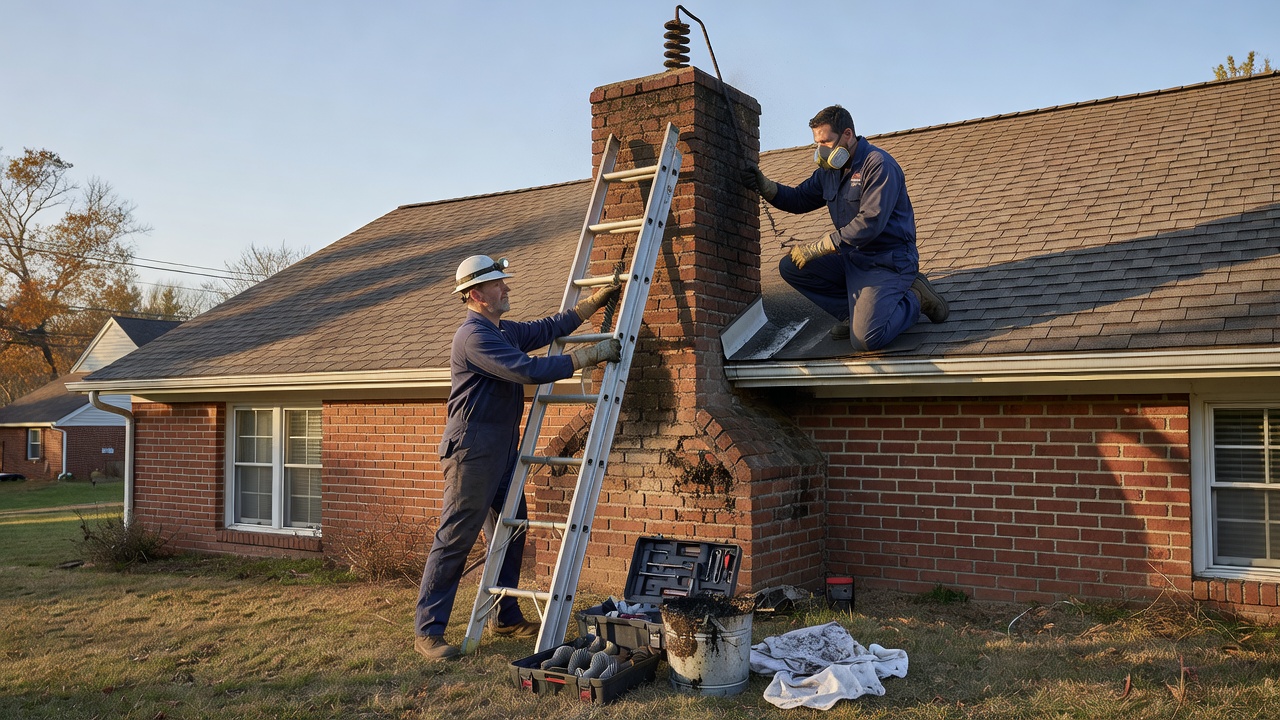
The technician may seal the fireplace opening with a protective barrier and use a high-efficiency vacuum system to collect debris. Depending on the chimney configuration, the technician may also work from the roof.
The chimney cap and crown should be evaluated before cleaning begins. The technician can then determine the appropriate cleaning method based on the flue and the condition of the deposits.
Step 4: The Creosote Is Removed
The cleaning method depends on the amount and condition of the creosote.
For lighter deposits, mechanical brushing may be sufficient. Heavier deposits can require rotary cleaning equipment designed to break buildup away from the flue walls.
Glazed or hardened deposits require more specialized treatment. A technician may recommend a chemical treatment designed to loosen or alter the deposits before mechanical removal. In particularly heavy cases, more than one treatment or cleaning visit may be necessary.
The important point is that there is no single cleaning method that is appropriate for every chimney. The technician should identify the condition of the flue before determining the scope of work.
For the Elmer and Cumberland County area, a standard chimney cleaning may fall around $150 to $250. More extensive cleaning for heavier deposits can range from approximately $250 to $400, while specialized heavy-creosote removal can reach $400 to $800 or more, depending on the chimney and amount of buildup.
Step 5: Inspect the Flue After Cleaning
Once the creosote has been removed, the technician should evaluate the condition of the flue. Cleaning can reveal damage that was previously hidden underneath the deposits.
Older masonry chimneys in Elmer and surrounding Salem County communities may have clay tile liners, deteriorated mortar joints, or other age-related problems. A camera inspection can provide a closer look at areas that cannot be evaluated from the firebox.
If damage is discovered, ask for photographs or a written report showing what was found. You should understand the condition of the liner before agreeing to additional repair work.
Step 6: Review the Results Before the Technician Leaves
After the cleaning and inspection, the technician should explain the work that was completed and any conditions that require attention.
Ask about:
- The amount and severity of creosote found
- The condition of the flue liner
- The condition of the chimney cap
- Any visible masonry or crown damage
- Whether additional repairs are recommended
- Whether the chimney is ready to be used again
A written service summary is useful because it gives you a record of the chimney’s condition and the work performed.
What If the Smell Comes Back?
A smoke or tar smell that returns after cleaning can indicate another problem. Possible causes include a damaged liner, a damper that does not seal properly, or airflow problems within the home.
Negative air pressure can affect fireplace performance in some homes. If the smell or drafting problem continues after cleaning, don’t assume that another cleaning will solve it. Have the chimney and venting system evaluated again.
Until the cause is identified, avoid continuing to use a fireplace that is producing unusual odors or smoke.
Frequently Asked Questions About Creosote Removal in Elmer, NJ
1. How much does creosote removal cost in Elmer, NJ?
A standard chimney cleaning in the Elmer and Cumberland County area may cost around $150 to $250. Heavier creosote buildup can increase the cost to approximately $250 to $400, while specialized removal of hardened deposits may cost $400 to $800 or more depending on the chimney and scope of work.
2. Can I burn a hot fire to remove creosote?
No. Intentionally burning a hotter fire to remove creosote can increase the risk of a chimney fire and should not be used as a cleaning method. If you suspect heavy or glazed buildup, stop using the fireplace and have the chimney professionally evaluated.
3. How do professionals remove heavy creosote?
The cleaning method depends on the type and severity of the buildup. Light deposits may be removed with mechanical brushing, while heavier or glazed deposits may require rotary equipment, specialized chemical treatment, or multiple cleaning treatments.
4. Should the chimney be inspected after creosote removal?
Yes. Cleaning can expose damage that was hidden beneath accumulated deposits, including cracked clay liners or deteriorated mortar joints. A post-cleaning evaluation, and camera inspection when appropriate, can help determine whether the flue is safe to continue using.
5. Why does my fireplace still smell like creosote after cleaning?
A persistent smoke or tar-like odor after cleaning may be related to a damaged liner, an improperly sealing damper, moisture, or airflow problems. If the odor or drafting issue continues, stop using the fireplace and have the chimney and venting system evaluated rather than assuming another cleaning will solve the problem.
Get Your Chimney Checked Before the Problem Gets Worse
Creosote removal is not simply about running a brush through the chimney. The technician needs to determine the condition of the deposits, choose an appropriate cleaning method, evaluate the flue afterward, and explain whether additional work is necessary.
Vineland Chimney serves Elmer, Millville, Bridgeton, Vineland, and communities throughout Cumberland and Salem counties. If your chimney has not been inspected this season, contact us for a free inspection. We’ll give you a clear assessment of what your chimney actually needs before you use the fireplace again.
Related from Vineland Chimney: Chimney Sweep Vineland · Chimney Sweep in Vineland · Chimney Sweep in Vineland, NJ
Areas we serve
Vineland, NJ · Vineland, NJ · Vineland, NJ · Vineland, NJ · Vineland, NJ · Vineland, NJ · All areas →