What Clayton Homeowners Get Wrong About Fireplace Cleaning
Most fireplaces in Clayton seem perfectly fine from the living room. The damper opens, the fire lights, and nothing appears obviously wrong. That sense of normalcy is one of the biggest reasons homeowners postpone chimney maintenance for years at a time.
Unfortunately, many of the most serious chimney problems develop where you can’t see them. Creosote accumulates inside the flue, moisture slowly damages masonry, and animals build nests above the damper without any obvious warning signs. By the time smoke starts backing into the house or water appears inside the fireplace, what could have been routine maintenance has often become a much larger repair.
Here are some of the most common misconceptions we hear from homeowners throughout Clayton, Vineland, Bridgeton, and surrounding South Jersey communities and what actually happens inside the chimney.
“I Hardly Use My Fireplace, So It Doesn’t Need Cleaning”
This is probably the most common misunderstanding. Many Clayton homeowners enjoy only a handful of fires each winter and assume that limited use means little maintenance.
The reality is different. Creosote forms based largely on how wood burns rather than how often you burn it.
Slow, smoldering fires and damp firewood produce significantly more creosote than hot, efficient fires burning properly seasoned hardwood. Even occasional fireplace use can leave enough creosote inside the flue to create a fire hazard.
Annual inspections remain important because they also identify problems unrelated to burning frequency, including:
- Animal nests
- Moisture intrusion
- Cracked chimney liners
- Masonry deterioration
- Damaged chimney caps
“If I Don’t Smell Smoke, Everything Must Be Fine”
Smoke odor is only one possible indicator of chimney problems. Many serious issues produce no noticeable smell at all. During South Jersey’s humid summers, creosote odors often become stronger because moisture activates volatile compounds inside the chimney.
During cooler or drier weather, that same chimney may produce almost no odor despite significant buildup. Likewise, structural problems such as cracked flue liners, deteriorated mortar joints, or damaged chimney crowns typically have no smell whatsoever. Routine inspections identify these hidden conditions before they become larger safety concerns.
“My Chimney Cap Protects Everything”
Installing a quality chimney cap is one of the smartest upgrades a homeowner can make.
A properly installed cap helps prevent:
- Rain intrusion
- Bird nests
- Squirrel entry
- Leaves and debris
- Downdrafts
However, chimney caps do not prevent creosote buildup. Creosote forms inside the chimney every time wood burns. Even perfectly protected chimneys with high-quality caps still require routine cleaning and inspection to remove combustible deposits from the flue.
“Fireplace Inserts Don’t Need Much Maintenance”
Wood-burning inserts burn more efficiently than traditional open fireplaces. That efficiency sometimes leads homeowners to believe maintenance is no longer necessary. In reality, inserts still require annual inspections. Improperly sized chimney liners, restricted airflow, or incorrect installation can actually increase creosote accumulation despite cleaner combustion. Gas inserts also require regular inspections.
Although gas burns much cleaner than wood, technicians still inspect for:
- Blocked venting
- Moisture damage
- Liner deterioration
- Carbon monoxide hazards
Cleaner fuel does not eliminate the need for chimney maintenance.
“Professional Cleaning Is Just Vacuuming Out Ash”
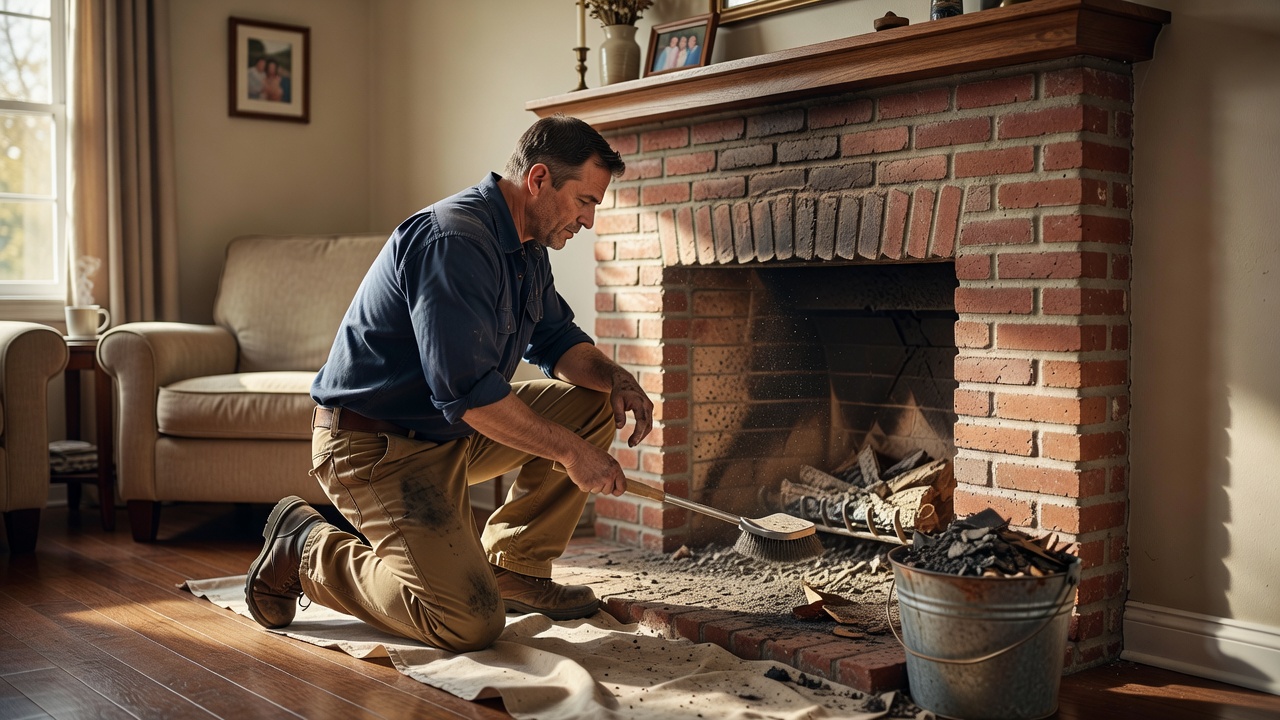
Professional chimney cleaning involves far more than removing soot from the fireplace.
A complete service typically includes:
- Mechanical chimney sweeping
- Firebox inspection
- Damper evaluation
- Smoke chamber inspection
- Flue liner assessment
- Chimney crown inspection
- Chimney cap evaluation
- Exterior masonry inspection
Professional equipment includes specialized chimney brushes, rotary cleaning systems, HEPA-filtered vacuum equipment, and inspection tools designed to evaluate areas homeowners simply cannot access.
The inspection often proves even more valuable than the cleaning itself because it identifies developing problems before they become expensive repairs.
For most homes throughout Clayton and Vineland, a standard chimney cleaning with a Level 1 inspection generally ranges between $150 and $275, depending on chimney height, accessibility, and condition.
“I Can Check the Entire Chimney with a Flashlight”
Many homeowners shine a flashlight through the damper and assume they have inspected the chimney.
Unfortunately, much of the system remains hidden.
A flashlight cannot reveal:
- Upper flue damage
- Smoke shelf obstructions
- Cracked liner tiles
- Hidden creosote deposits
- Offset flue sections
- Nesting material above bends
Professional inspections use mirrors, specialized lighting, and, when necessary, video camera equipment to evaluate the full length of the chimney. This provides a much more complete understanding of the chimney’s condition than any visual inspection from inside the firebox.
Why Annual Chimney Inspections Matter
Regular chimney inspections often identify problems long before homeowners notice symptoms.
Common findings include:
- Early creosote accumulation
- Small liner cracks
- Moisture intrusion
- Damaged chimney caps
- Masonry deterioration
- Animal nests
- Draft problems
Addressing these issues early is almost always less expensive than repairing extensive damage after another heating season.
Frequently Asked Questions
How often should a fireplace be cleaned?
Most fireplaces should be professionally inspected once a year, with cleaning performed whenever creosote buildup reaches a level that requires removal.
Can I clean my own fireplace?
Homeowners can safely remove cooled ashes and perform basic visual inspections, but cleaning the chimney flue and evaluating hidden components requires professional equipment.
Does a chimney cap eliminate the need for chimney cleaning?
No. A chimney cap prevents outside debris and animals from entering the chimney but does not stop creosote from forming during normal fireplace use.
Do gas fireplaces require chimney inspections?
Yes. Gas-burning appliances still require inspections to check venting systems, liners, moisture intrusion, and carbon monoxide safety.
What does a professional chimney inspection include?
A professional inspection typically evaluates the firebox, damper, smoke chamber, flue liner, chimney crown, chimney cap, exterior masonry, and overall safety of the chimney system.
Schedule Your Free Chimney Inspection
If your fireplace hasn’t been professionally cleaned or inspected within the past year, now is an excellent time to have it evaluated before the next heating season begins.
Contact Vineland Chimney today to schedule your free chimney inspection and keep your fireplace operating safely all season long.
Our services
Professional Chimney Repair & Cleaning in Millville, … · Chimney Repairs & Masonry Work in Vineland, NJ · Chimney Inspections in Vineland, NJ · Chimney Sweep in Vineland · Chimney Sweep Vineland · Chimney Inspection in Vineland, NJ
Areas we serve
Vineland, NJ · Vineland, NJ · Vineland, NJ · Vineland, NJ · Vineland, NJ · Vineland, NJ · All areas →